Just before Christmas, Estonia’s Soomaa region will mark four years since the inscription of its tradition of building and using expanded dugout boats in UNESCO’s List of Intangible Cultural Heritage in Need of Urgent Safeguarding. The past years have shown that this has not been merely a symbolic recognition, but a process that genuinely supports the sustainability of living heritage.
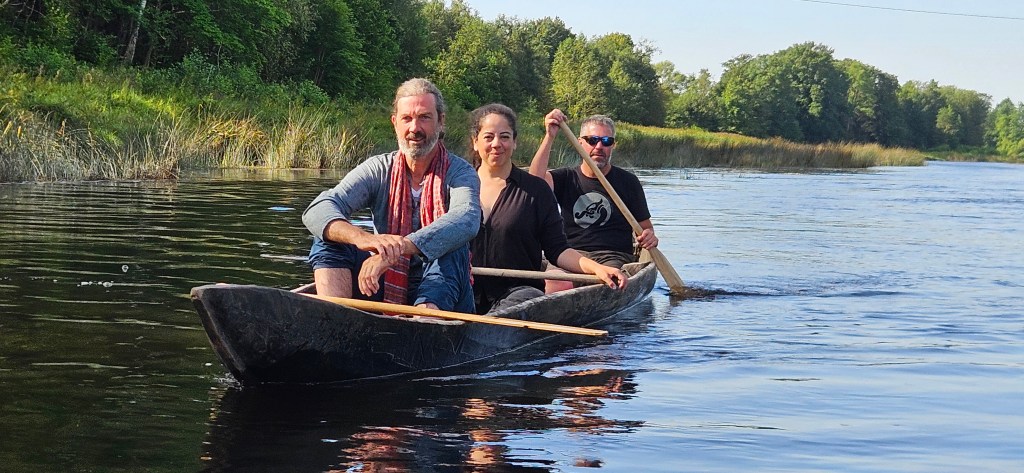
Soomaa’s dugout boat culture was inscribed on the UNESCO List at the end of 2021. As it is a manifestation of living heritage in need of urgent safeguarding, its situation and development are under special custody of the local community, Soomaa’s municipalities and the Estonian state. Soomaa is also the western border of the dugout boat culture in Eurasia, which gives this tradition international significance.
The first periodic report, which has just been submitted to UNESCO, summarizes past years’ activities for the preservation and development of dugout boat culture. The report highlights the strengthening of the community, the emergence of new dugout boat builders and the completion of several new dugout boats.
Dugout boat master and ecotourism entrepreneur Aivar Ruukel assesses the past few years highly favourably: “I am satisfied with what has been accomplished in the first four years during which the dugout boat culture has been included in the UNESCO Intangible Cultural Heritage List. The dugout boat community has become stronger, new members have joined the Estonian Dugout Boat Society (EDBS) and several new dugout boats have been built.”
An important role in the viability of the tradition is played by the intergenerational transfer of skills from dugout boat masters to younger enthusiasts, often from father to son. The youngest master who built his own dugout boat, 19-year-old Rando Remm, also combined practical experience with the research project “Building a Dugout Boat” which received the second place in the national competition of creative projects for Estonian high school students. His supervisor, dugout boat master Jaan Keerdo, was recognized by Alar Karis, the President of Estonia, with a certificate of honour.
The contribution of the Tori Rural Municipality administration is also noteworthy. Thanks to the municipality’s support, a Dugout Boat House (Haabjakoda) was established on the banks of the Pärnu River in the Tori Rural Municipality. There, visitors can learn about the dugout boat culture, experience the process of building a dugout boat, and also join a dugout boat ride on the river.
In August 2025, an international dugout boat camp was held at the Dugout Boat House, attended by enthusiasts from Sweden, Finland, Estonia, Hungary, Denmark, the USA, Switzerland, and Great Britain. In addition to practical work, knowledge was shared about dugout boat cultures in Soomaa, Guyana and Borneo.
According to Oliver Loode, director of URALIC Center, the experience to date confirms the importance of the UNESCO inscription: “The analysis of the last four years clearly demonstrates that the inscription on the UNESCO Intangible Cultural Heritage List has given a strong positive boost to Soomaa’s dugout boat culture. It is a good practice of preserving the intangible heritage in accordance with UNESCO principles – and is of interest not only in Estonia, but also worldwide.
More information about Soomaa’s dugout boat culture:
https://ich.unesco.org/en/USL/building-and-use-of-expanded-dugout-boats-in-the-soomaa-region-01680
 Haabjas - Soomaa ühepuulootsik